
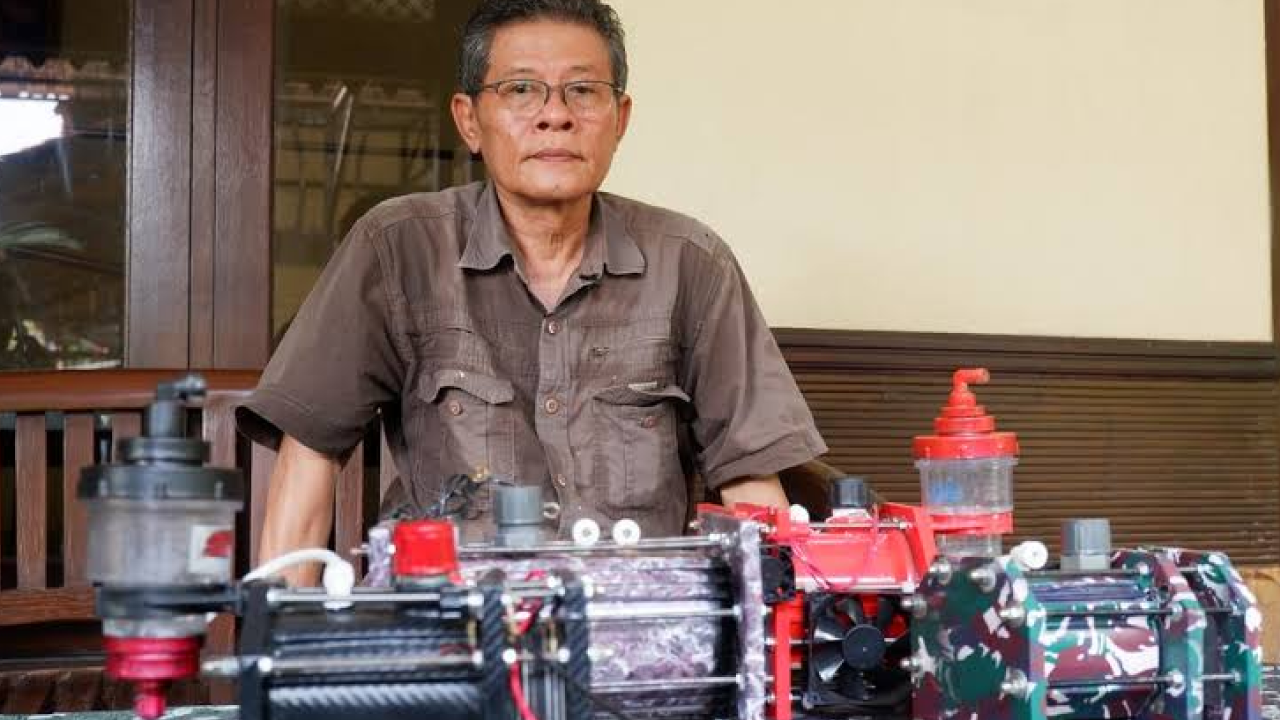
The Hydrogen Fuel Frontier: Aryanto Misel's Nikuba Tech Shakes the World
20 Sep, 2026
- 15820 views



2016 - 2026 Copyright @ Graphie.
All Rights Reserved
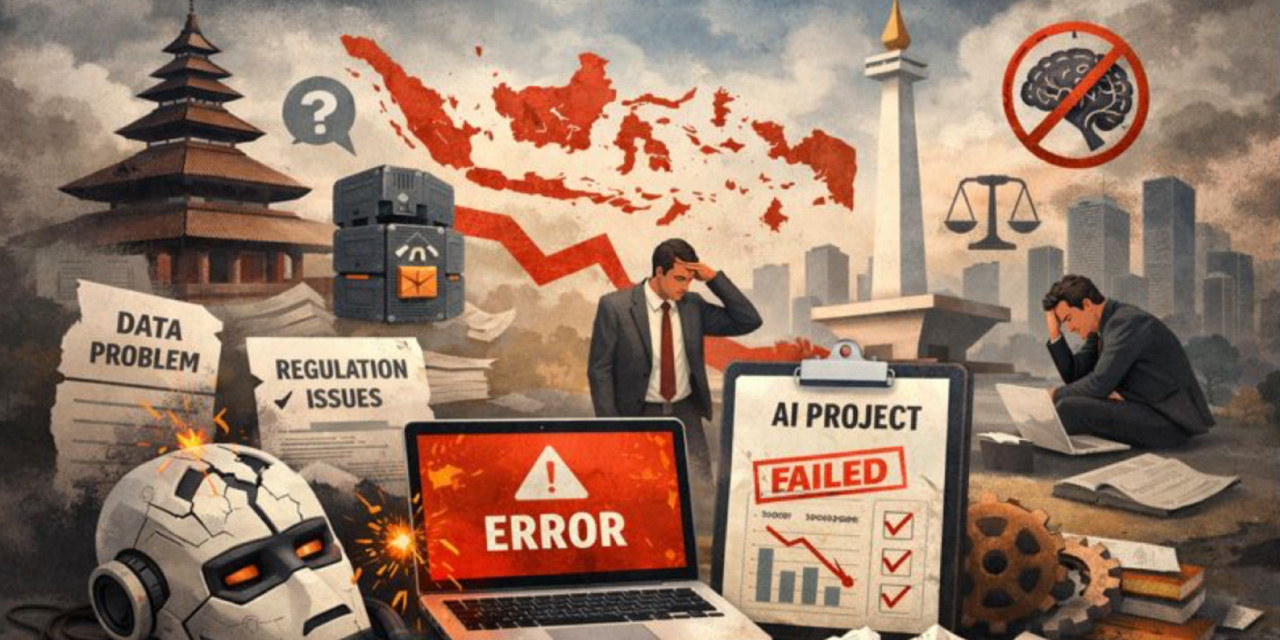
AI is quickly becoming a buzzword across Indonesia. Companies are racing to adopt artificial intelligence in the name of efficiency, innovation, and—let’s be honest—so they don’t look left behind. Yet behind all the optimistic headlines, there’s a quieter reality that rarely gets discussed: many AI projects in Indonesia are failing.
Not in dramatic ways. There are no public shutdowns or crisis announcements. Instead, these projects fail silently. The AI still exists, but it’s barely used, rarely trusted, and eventually ignored.
In many organizations, AI appears in the form of chatbots, analytics dashboards, or recommendation systems. Technically, they work. Practically, they don’t move the needle.
The chatbot is live, but customers still prefer human agents.
The AI dashboard is available, but decisions are still made by gut feeling.
Predictive models are built, but never integrated into daily operations.
On paper, AI is “implemented.”
In reality, AI has no real influence.
The most common mistake is adopting AI simply because it’s trending.
Many AI initiatives start with the question:
“What AI technology should we use?”
When the real question should be:
Konsultasi GRATIS tanpa Komitmen, dan temukan strategi terbaik untuk bisnis Anda.
CHAT SEKARANG“What problem are we actually trying to solve?”
Without a clearly defined problem, AI becomes an expensive experiment. There are no meaningful success metrics, no urgency to use it, and no reason for teams to trust or rely on it.
AI is only as good as the data behind it. In many Indonesian organizations:
Data is scattered across multiple systems
Many processes are still manual
Data quality is inconsistent
Documentation is minimal
As a result, AI outputs often feel off or irrelevant. Once users see a few questionable recommendations, trust drops instantly. And once trust is gone, even the best AI model won’t survive.
Many AI tools used in Indonesia are designed for global markets. The problem? Indonesia’s context is different.
Language nuances, cultural behavior, communication styles, and decision-making patterns all matter. Without proper localization, AI feels rigid, out of touch, and inaccurate.
This is why locally contextualized AI—especially language models built for Indonesian users—has become increasingly important. AI that doesn’t understand its users will never earn their trust.
In many companies, AI lives in a gray area.
IT teams see it as a business initiative.
Business teams see it as a technical project.
Other departments stay uninvolved.
Without a clear owner, AI has no internal champion. When results aren’t immediate, support fades, budgets shrink, and the project quietly stalls. AI isn’t just a tool—it changes how people work. And change requires leadership.
Unclear AI regulations and ethical concerns often make companies overly cautious. AI is limited to basic automation and never trusted with meaningful decision-making.
Ironically, the companies that succeed with AI are usually those that experiment first—responsibly—and build governance along the way. Playing it too safe often means never moving forward at all.
In Indonesia, AI rarely fails because of bad algorithms. It fails because of:
Weak strategy
Unprepared data
Lack of human readiness
Poor understanding of local context
AI is not a magic solution. It’s an amplifier. If an organization’s foundation is weak, AI will simply expose it faster.
Indonesia has no shortage of AI success stories. But it also has many AI failures that go unspoken.
Learning from failure is far more valuable than endlessly celebrating polished success stories. Because in the end, AI won’t replace humans—but it will challenge organizations to rethink how they work, how they decide, and how ready they are to change.
And that is where many AI projects in Indonesia still fall short.

Recommended for you
The Hydrogen Fuel Frontier: Aryanto Misel's Nikuba Tech Shakes the World
The Best Power-Ups and Boosters in Ducky Pop: When and How to Use Them
The Psychology Behind Match-3 Games: Why Ducky Pop is So Addictive
AI Usage in Indonesia: What the Data Reveals About Adoption, Usage Patterns, and Integration Readiness
Feeding the Future: Tackling Global Food Security with AI Agriculture
Ducky Pop: A Splash in the Match-3 Pool
From Idea to Launch: A Step-by-Step Guide to Building Your Dream Startup
The Digital Revolution: How Mobile Apps Have Transformed Our Daily Lives
Ducky Pop: A Splash in the Match-3 Pool
Unlock the Hidden Worlds: Exploring the Different Themes and Levels in Ducky Pop
Tonework: The Future of Personalized Beauty is Here
Typography Tips That Wow: How to Use Fonts Like a Pro
The Future of Website Design: AI-Driven Tools Transforming User Experience
The Power of Data Analytics: How to Drive Growth with Informed Decisions
UI vs. UX: Cracking the Code of Digital Magic