

The Hydrogen Fuel Frontier: Aryanto Misel's Nikuba Tech Shakes the World
20 Sep, 2026
- 15820 views

2016 - 2026 Copyright @ Graphie.
All Rights Reserved
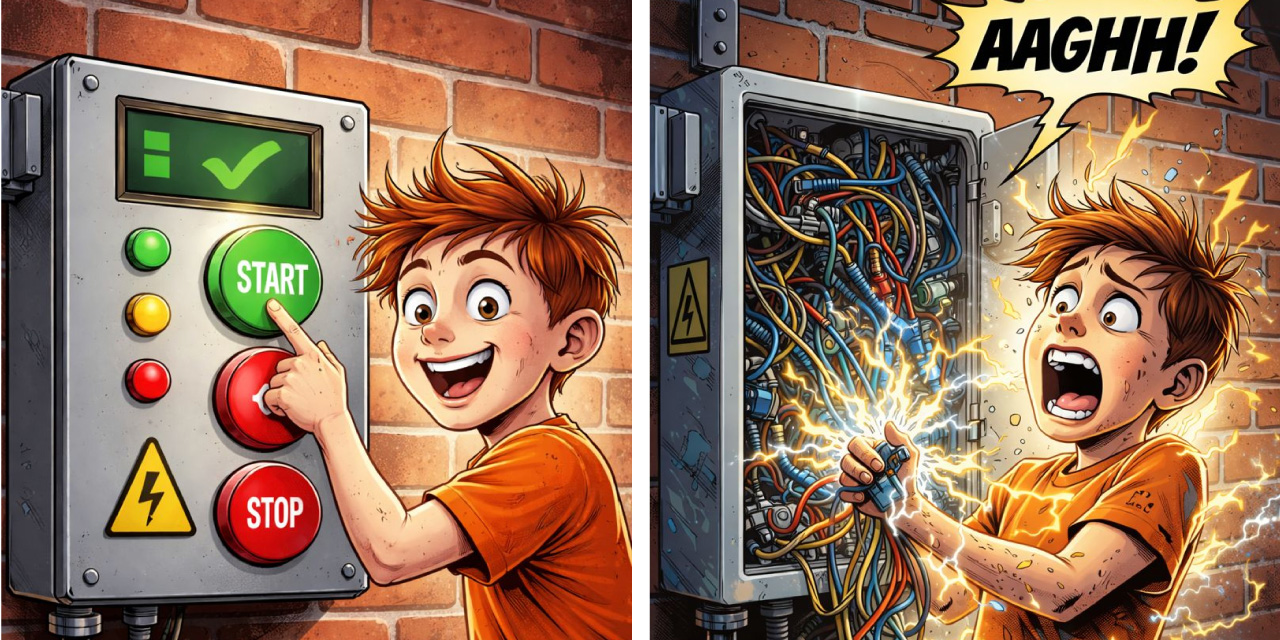
We live in an era where technology evolves faster than ever. AI-powered systems, cloud-native architectures, machine learning algorithms, and automation tools are everywhere. Software today is undeniably high-tech. But here’s the uncomfortable question: If users struggle to understand, navigate, or enjoy your software—does all that technology really matter?
Konsultasi GRATIS tanpa Komitmen, dan temukan strategi terbaik untuk bisnis Anda.
CHAT SEKARANGBehind every powerful software system lies an assumption: that users will know how to use it. In reality, most users don’t care about how advanced your backend is. They don’t ask what framework you used, how scalable your architecture is, or how optimized your algorithm runs. They care about one thing: How it feels to use your product.
History shows us countless examples of technically superior software that failed—not because it lacked capability, but because it lacked clarity, simplicity, and usability. High-tech software without great UX often becomes:
Confusing
Overwhelming
Underused
Eventually abandoned
Technology is built by humans, for humans. UX (User Experience) is the bridge between complex systems and real human behavior. It translates logic into intuition, features into flow, and power into ease. A great UX should:
Reduces cognitive load
Guides users naturally
Makes complex actions feel simple
Builds trust without explanation
Without UX, technology stays impressive only on paper.
Many still think UI (User Interface) is just about visuals. Colors, typography, and layouts are often treated as aesthetic choices. In truth, UI is communication. Every button, spacing, animation, and visual hierarchy tells users:
Where to look
What to do
What matters
What comes next
A poorly designed UI forces users to think. A great UI lets them flow. And when users flow, engagement rises, errors drop, and satisfaction grows.
In a world where technology is increasingly accessible and replicable, experience becomes the differentiator. Features can be copied. Technology can be matched. But a seamless, human-centered, emotionally resonant experience? That’s hard to replicate. Great UX turns software into something people want to use—not something they have to use.
Not useless—but severely limited. High-tech software reaches its full potential only when paired with exceptional UI and UX. Without it, even the most advanced system risks becoming invisible, ignored, or rejected.
Great UI/UX doesn’t come from templates. It doesn’t come from trends alone and it certainly doesn’t come from guesswork. It comes from deep understanding, tailored design, and thoughtful execution. At Graphie, we believe UI/UX should be:
Tailor-made, not generic
Breathtaking, yet purposeful
Seamless, from first interaction to last
Wonderful, because software should feel good to use
We don’t just design interfaces. We design experiences that elevate technology and bring it closer to people. Because in the end, great UI/UX is not optional—it’s essential. And if you’re ready to transform your high-tech software into something truly meaningful, you can start creating it with Graphie.

Recommended for you
The Hydrogen Fuel Frontier: Aryanto Misel's Nikuba Tech Shakes the World
The Best Power-Ups and Boosters in Ducky Pop: When and How to Use Them
The Psychology Behind Match-3 Games: Why Ducky Pop is So Addictive
AI Usage in Indonesia: What the Data Reveals About Adoption, Usage Patterns, and Integration Readiness
Feeding the Future: Tackling Global Food Security with AI Agriculture
Ducky Pop: A Splash in the Match-3 Pool
From Idea to Launch: A Step-by-Step Guide to Building Your Dream Startup
The Digital Revolution: How Mobile Apps Have Transformed Our Daily Lives
Ducky Pop: A Splash in the Match-3 Pool
Unlock the Hidden Worlds: Exploring the Different Themes and Levels in Ducky Pop
Tonework: The Future of Personalized Beauty is Here
Typography Tips That Wow: How to Use Fonts Like a Pro
The Future of Website Design: AI-Driven Tools Transforming User Experience
The Power of Data Analytics: How to Drive Growth with Informed Decisions
UI vs. UX: Cracking the Code of Digital Magic