
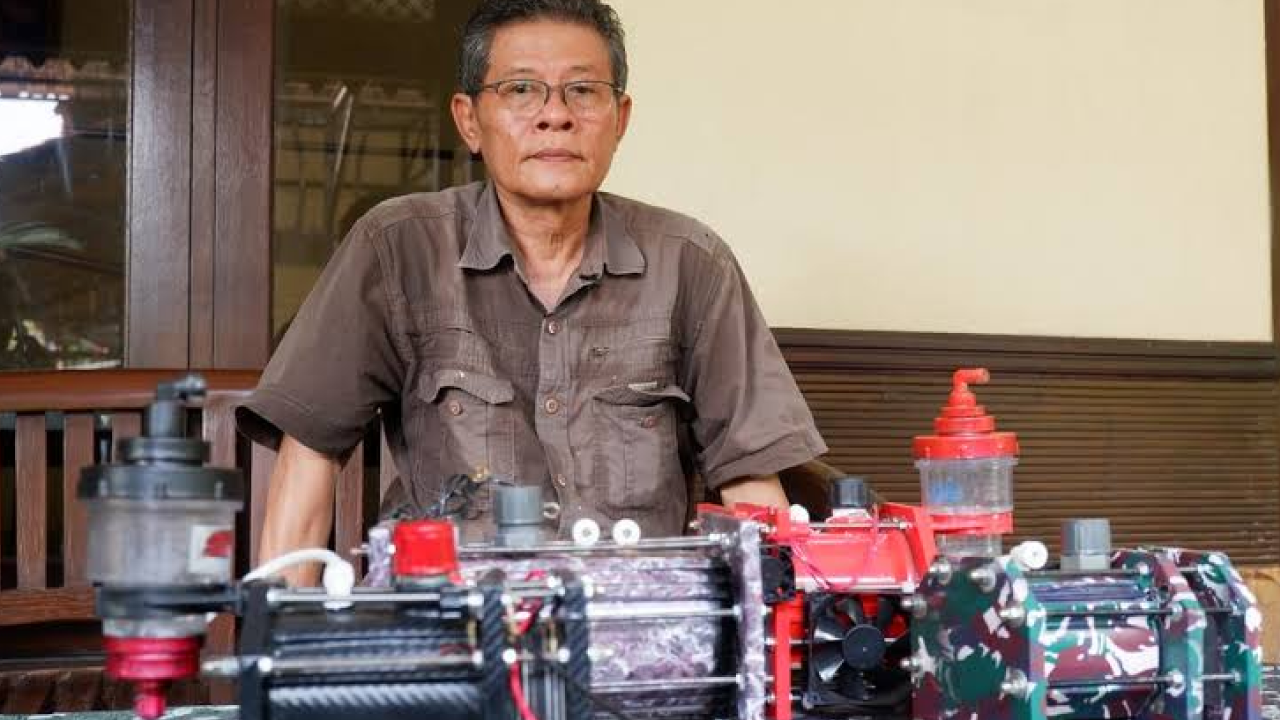
The Hydrogen Fuel Frontier: Aryanto Misel's Nikuba Tech Shakes the World
20 Sep, 2026
- 15820 views



2016 - 2026 Copyright @ Graphie.
All Rights Reserved
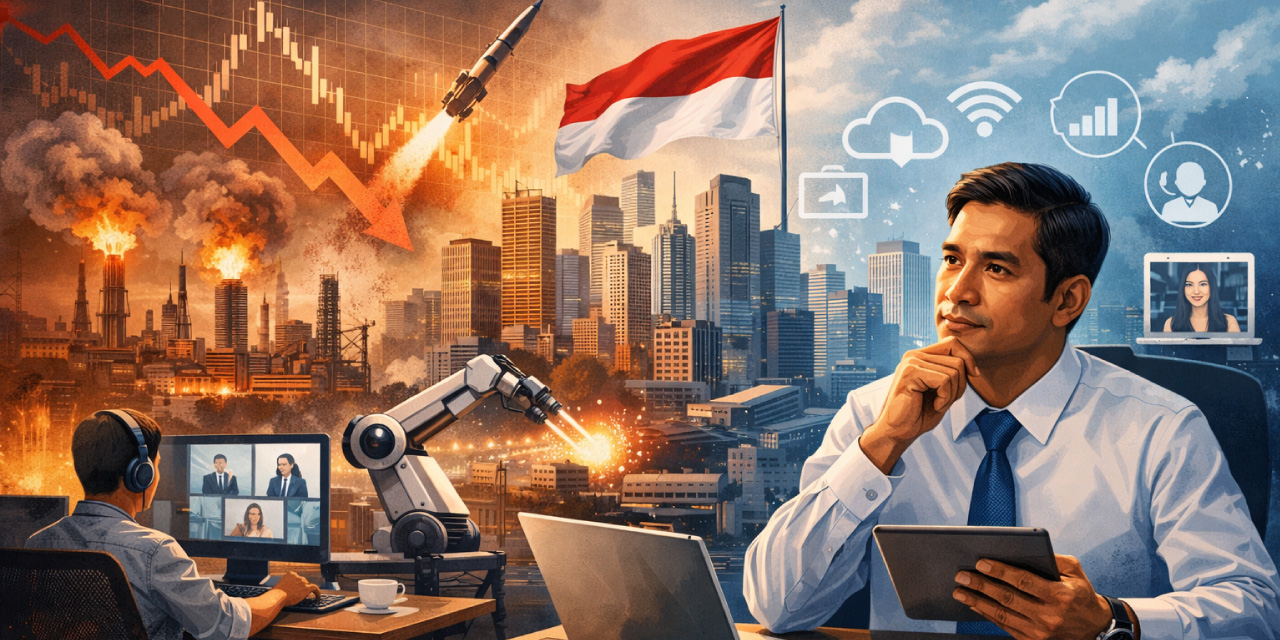
The escalating geopolitical tension involving the United States, Israel, and Iran may appear geographically distant from Indonesia. However, in today’s interconnected global economy, no major conflict remains isolated. Energy markets react. Currency markets fluctuate. Supply chains tighten. Investor sentiment shifts.
For Indonesian businesses, the real question is not whether we are directly involved in the conflict. The real question is: Are we structurally prepared for its economic consequences?
History has shown that prolonged instability in energy-producing regions often drives global oil prices upward. Higher oil prices translate into increased fuel costs. Increased fuel costs raise logistics expenses. Logistics expenses influence consumer prices. Eventually, business margins compress.
This is not a prediction of collapse. It is a reminder of interconnected risk.
And in times of interconnected risk, resilience becomes strategy.
Periods of global uncertainty tend to accelerate change. Companies that were already considering digital transformation suddenly realize it is no longer optional. It becomes essential.
If fuel prices rise and daily commuting becomes more expensive, traditional operational models—full physical attendance, paper-based workflows, centralized operations—become cost burdens.
Hybrid and remote work models are no longer post-pandemic trends. In a high-energy-cost environment, they are efficiency strategies. Reducing daily physical presence by even 30–50?n significantly lower operational expenses related to utilities, transportation allowances, and infrastructure.
Automation follows the same logic. Digital invoicing, integrated payroll systems, customer relationship management platforms, and lightweight ERP systems are not luxuries reserved for large enterprises. They are tools that protect margins.
In uncertain environments, speed and accuracy define competitiveness. Manual processes create friction. Digital systems create clarity.
Many businesses see technology as a growth driver. That is true. But in volatile times, technology serves an even more critical function: margin protection.
With proper data systems in place, businesses can clearly identify:
Which products generate the highest contribution margins
Which distribution channels are most efficient
Which customer segments provide stable recurring revenue
Which cost structures require immediate restructuring
Decision-making becomes data-driven rather than reactive.
In times of uncertainty, data becomes a compass.
Digital transformation alone is not sufficient. Business resilience requires financial and strategic discipline.
#! Strengthen cash flow management.
Companies should aim to secure liquidity buffers capable of sustaining operations for six to nine months under pressure. Reducing unnecessary fixed costs and renegotiating contracts can provide breathing room.
#2 Diversify supply chains.
Over-reliance on a single supplier or region increases vulnerability. Strategic diversification enhances operational continuity.
#3 Maintain transparent internal communication.
Uncertainty creates anxiety. Clear communication with teams builds trust and collective responsibility in managing efficiency efforts.
#4 Avoid aggressive debt-driven expansion.
Volatility increases financial risk. Expansion decisions should be grounded in realistic projections rather than optimistic assumptions.
Stability is not built through optimism alone. It is built through disciplined preparation.
Despite global uncertainty, Indonesia possesses strong structural fundamentals: a large domestic market, growing digital adoption, and a productive, technology-adaptive workforce.
If Indonesian businesses use this period to streamline cost structures, digitize operations, and strengthen financial foundations, the nation will not merely withstand external shocks—it will emerge stronger.
Economies do not collapse solely because of war. They weaken when businesses fail to adapt.
From a technology leadership perspective, the current global tension should not trigger panic. It should trigger preparation.
This is not the time to freeze.
This is not the time to speculate emotionally.
This is the time to optimize, digitize, and strengthen operational resilience.
Every global crisis produces two types of companies:
Konsultasi GRATIS tanpa Komitmen, dan temukan strategi terbaik untuk bisnis Anda.
CHAT SEKARANGThe choice is ours.

Recommended for you
The Hydrogen Fuel Frontier: Aryanto Misel's Nikuba Tech Shakes the World
The Best Power-Ups and Boosters in Ducky Pop: When and How to Use Them
The Psychology Behind Match-3 Games: Why Ducky Pop is So Addictive
AI Usage in Indonesia: What the Data Reveals About Adoption, Usage Patterns, and Integration Readiness
Feeding the Future: Tackling Global Food Security with AI Agriculture
Ducky Pop: A Splash in the Match-3 Pool
From Idea to Launch: A Step-by-Step Guide to Building Your Dream Startup
The Digital Revolution: How Mobile Apps Have Transformed Our Daily Lives
Ducky Pop: A Splash in the Match-3 Pool
Unlock the Hidden Worlds: Exploring the Different Themes and Levels in Ducky Pop
Tonework: The Future of Personalized Beauty is Here
Typography Tips That Wow: How to Use Fonts Like a Pro
The Future of Website Design: AI-Driven Tools Transforming User Experience
The Power of Data Analytics: How to Drive Growth with Informed Decisions
UI vs. UX: Cracking the Code of Digital Magic