

The Hydrogen Fuel Frontier: Aryanto Misel's Nikuba Tech Shakes the World
20 Sep, 2026
- 15820 views


2016 - 2026 Copyright @ Graphie.
All Rights Reserved
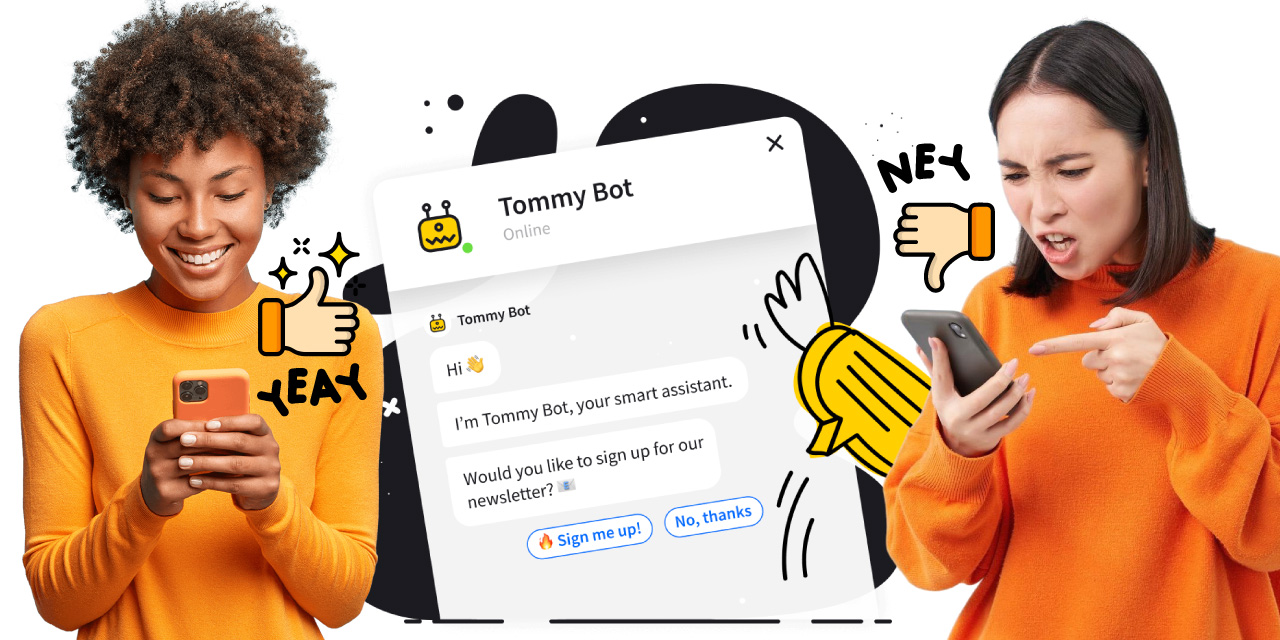
Chatbots are everywhere.
On websites. On WhatsApp. On Instagram DMs.
Even businesses that haven’t stabilized their internal operations are already using one.
Many companies proudly say:
“We’re already using AI chatbot technology.”
But that’s not the real question.
Konsultasi GRATIS tanpa Komitmen, dan temukan strategi terbaik untuk bisnis Anda.
CHAT SEKARANGIs your chatbot truly improving your business performance — or is it just creating the illusion of digital transformation?
The problem is not whether you have a chatbot.
The real issue is whether it is strategically designed to deliver measurable impact.
Let’s break this down properly: how chatbots are typically used across different business scales, what they are actually capable of beyond sales, and how to evaluate whether yours is genuinely effective.
A chatbot is an automated system designed to simulate conversation, whether with customers or internal teams. It can be:
Rule-based (menu-driven, keyword-triggered)
NLP-powered (intent recognition and contextual understanding)
Generative AI-based (more natural, flexible responses)
The technology itself is not the main issue.
The misunderstanding lies in expectations.
Some companies expect chatbots to replace humans entirely. Others underutilize them as simple auto-reply tools. Both approaches are flawed.
An effective chatbot is not the most advanced one.
It is the one designed around real business processes.
Large organizations typically implement chatbots as part of an omnichannel ecosystem integrated with CRM, ERP, ticketing systems, and analytics dashboards.
Their primary objectives are:
Operational efficiency
Standardized service quality
Reduced ticket volume
However, this is where a paradox often appears.
When the main KPI becomes “reduce tickets,” chatbots are frequently designed to keep customers inside automated flows for as long as possible. The result? Customers feel trapped.
The chatbot becomes a gatekeeper instead of a solution provider.
Mid-sized businesses commonly use chatbots to:
Respond instantly to inquiries
Qualify leads
Send payment reminders
Confirm transactions
At this level, chatbots can be highly effective — but only if properly integrated into internal systems.
One common mistake is deploying a chatbot as a standalone tool without connecting it to CRM, inventory, or operational databases. When that happens, the chatbot can answer questions but cannot execute actions.
And customers care more about actions than answers.
For small businesses, chatbots are often used as simple WhatsApp auto-responders or menu-based tools. The primary goal is practical:
Look professional
Avoid answering messages 24/7
At this scale, chatbots are helpful. But their potential often stops there. Few small businesses revisit or optimize their chatbot strategy after initial deployment.
Ironically, this is where growth opportunities are frequently missed.
Absolutely not.
Sales and marketing are often the starting point. Chatbots can:
Qualify leads automatically
Follow up instantly (which significantly affects conversion rates)
Send abandoned cart reminders
Schedule appointments
Speed alone can dramatically increase conversion performance.
But chatbots extend far beyond revenue generation.
In customer service, they can handle order tracking, refund status, delivery updates, and intelligent routing to human agents. However, the effectiveness depends on one critical factor:
Can the chatbot execute actions — or does it merely provide information?
A chatbot that cannot access real-time data is essentially a dynamic FAQ.
Beyond external communication, chatbots can also support internal operations. HR teams can automate leave requests, payroll inquiries, onboarding information, and training reminders. Purchasing departments can automate stock checks, reorder alerts, vendor updates, and approval workflows.
Interestingly, internal chatbots often perform better than customer-facing ones because internal processes are structured and predictable.
There is also one highly underrated benefit: data insight.
Every chatbot conversation contains structured information about:
Most frequent customer concerns
Recurring complaints
Operational bottlenecks
Customer pain points
When analyzed properly, chatbot logs can become a strategic intelligence tool.
Yet many companies never review this data.
A chatbot’s effectiveness cannot be measured solely by cost reduction or ticket deflection rates.
It is effective if it:
Resolves a significant percentage of common cases
Integrates with core business systems
Allows smooth escalation to human agents
Is evaluated and optimized regularly
It is ineffective if it:
Exists only because competitors use one
Cannot access internal databases
Is never updated
Is designed to block customers rather than serve them
Here’s the slightly uncomfortable truth:
Many companies invest in chatbots because they fear being left behind — not because they truly understand customer experience strategy.
Technology adoption without strategic clarity rarely delivers real ROI.
Before assuming your chatbot is “working,” consider these questions:
Can it perform real actions (refunds, updates, bookings)?
Does it recognize returning customers and access their history?
Is human escalation fast and frictionless?
Do you know which intents fail most frequently?
Is performance reviewed regularly?
If several answers are “no,” your chatbot may not be optimized yet.
Chatbot Utilization by Business Scale
| Aspect | Large Enterprise | Mid-Sized Company | Small Business |
|---|---|---|---|
| Primary Goal | Efficiency & standardization | Faster response & sales support | Basic automation |
| System Integration | CRM, ERP, Ticketing | CRM / WhatsApp API | Minimal |
| Flow Complexity | High | Moderate | Low |
| Common Risk | Customer frustration | Poor integration | Stagnation |
| ROI Potential | High (if strategic) | Stable | Volume-dependent |
A chatbot is not a magic solution. It can become:
A powerful efficiency engine
A revenue accelerator
A strategic insight generator
Or…
A source of customer frustration.
The technology itself is rarely the problem.
Design, integration, and strategic ownership determine success.
So before proudly stating that your company “uses AI chatbot technology,” ask a more important question:
Does your chatbot actually solve problems — or does it simply respond to them?
Not sure if your chatbot is working — or just existing? Let’s fix that.
Graphie helps businesses design chatbot solutions that are not only automated, but strategic, integrated, and results-driven.
If you want to understand how an effective chatbot can improve your sales, customer service, HR, or operational efficiency — reach out to us today.
Get a free consultation now and discover how Graphie can build a chatbot solution that actually works for your business.

Recommended for you
The Hydrogen Fuel Frontier: Aryanto Misel's Nikuba Tech Shakes the World
The Best Power-Ups and Boosters in Ducky Pop: When and How to Use Them
The Psychology Behind Match-3 Games: Why Ducky Pop is So Addictive
AI Usage in Indonesia: What the Data Reveals About Adoption, Usage Patterns, and Integration Readiness
Feeding the Future: Tackling Global Food Security with AI Agriculture
Ducky Pop: A Splash in the Match-3 Pool
From Idea to Launch: A Step-by-Step Guide to Building Your Dream Startup
The Digital Revolution: How Mobile Apps Have Transformed Our Daily Lives
Ducky Pop: A Splash in the Match-3 Pool
Unlock the Hidden Worlds: Exploring the Different Themes and Levels in Ducky Pop
Tonework: The Future of Personalized Beauty is Here
Typography Tips That Wow: How to Use Fonts Like a Pro
The Future of Website Design: AI-Driven Tools Transforming User Experience
The Power of Data Analytics: How to Drive Growth with Informed Decisions
UI vs. UX: Cracking the Code of Digital Magic